Ao longo dos seus mais de trinta anos de trabalho, Beth Moysés se dedicou às mulheres, à história das mulheres, à luta e à consciência contra a violência de gênero, à resistência daquelas que nos antecederam, àquelas que quiseram curar o mundo de alguma forma.
Os dois trabalhos por Beth aqui apresentados orbitam um problema relacionado com essa violência, expandindo-a sem esquecê-la: a interação do dentro com o fora. Onde começa o dentro? Onde termina o fora?
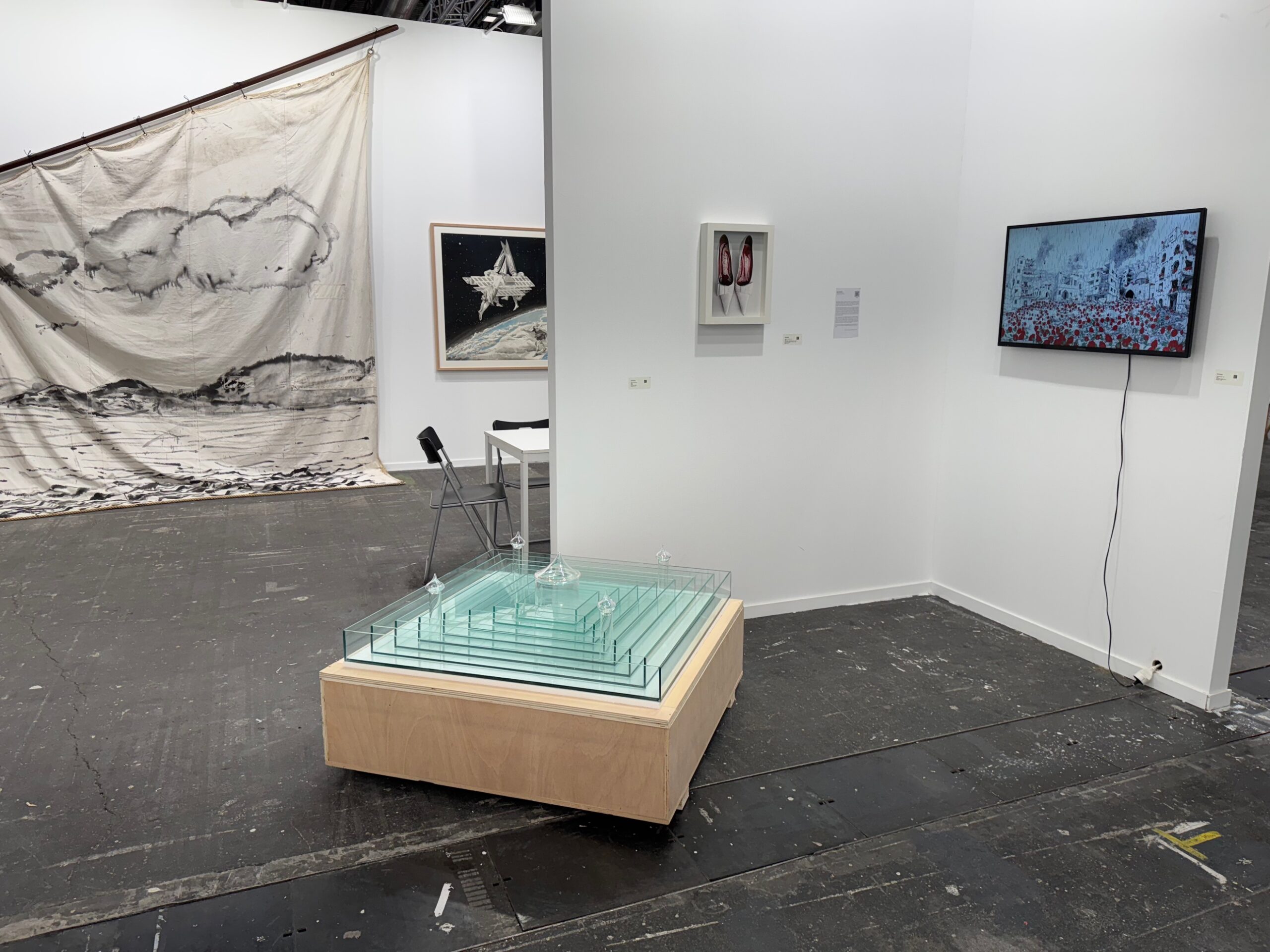
Tanto o vídeo Tormenta quanto o objeto Castelo Interior, inspirados em Santa Teresa de Ávila e na sua seguidora, Santa Teresinha do Menino Jesus, nos deixam ver, separadamente ou em interação, o modo como Beth procura abordar a complexa relação dentro-fora.
Essa inspiração, no entanto, pouco tem a ver com os aspectos teológicos de Santa Teresa de Ávila. O que Beth procura é extrair o que acredita ainda existir de contemporâneo nessa obra prodigiosa: a resistência feminina, mesmo quando inconsciente; o convite à meditação atenta; o olhar para o conflito da interioridade, da alma frente ao mundo.
De que modo separar dentro e fora? De que modo conectá-los?
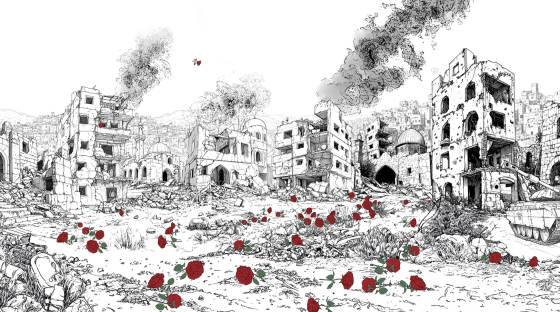
Tormenta representa o que resta de uma cidade em guerra junto à promessa dessa chuva de rosas que cai sobre as ruínas. Um renascimento ou um túmulo? Seria possível curar o fora? Seria possível não adoecer no dentro?
É na alma que encontramos a transparência de uma interioridade que se deseja inviolável, longe da violência, apartada do mundo, esse Castelo Interior como lugar imaterial onde nos encontraríamos a salvo das vicissitudes da vida no fora.
Mas poderíamos mesmo nos distanciar do mundo e nos resguardar na interioridade?
Talvez não seja o caso de se resguardar no dentro, na interioridade, mas compreender o convite maior de Santa Teresa em relação à meditação, que significa, no caso de Beth, compreender o fora e seus ecos no dentro: o exterior mostrado no vídeo e o interior do objeto, mas também o exterior do objeto refletindo em cristal e o interior refletido de quem assiste ao vídeo.
Meditar significa refletir acerca do que nos chega, do que acontece com nós, em nós. Trata-se de questionar o que se apresenta de imediatamente visível no mundo em relação ao que se oculta na interioridade. Trata-se de tentar ver o que se esconde no mundo para aparecer em nossa interioridade, como um sintoma que demanda uma cura.
Pensar com Santa Teresa, ou partir de Santa Teresa para pensar, significa uma ressonância não com seus dogmas, mas com as visões que ela teve no alvorecer da modernidade; visões essas que nada perderam da vontade mística de cura nelas contidas.
Também Santa Teresa de Ávila teve de afirmar para um exterior o que havia na sua interioridade, seu modo de ver o mundo e de conceber os caminhos que deveríamos tomar para nos livrarmos da Tormenta que nos chega desde fora sacudindo o nosso dentro.
Both the video Tormenta and the object Castelo Interior, inspired by Saint Teresa of Ávila and her follower, Saint Thérèse of the Child Jesus, allow us to see, separately or in dialogue with one another, how Beth seeks to address the complex relationship between inside and outside.
This inspiration, however, has little to do with the theological aspects of Saint Teresa of Ávila. What Beth seeks is to draw out what she believes remains relevant and contemporary in this extraordinary body of work: female resistance, even when unconscious; the invitation to attentive meditation; and an exploration of the conflict of interiority, of the soul in relation to the world.
How can the inside and the outside be separated? How can they be connected?
Tormenta represents what remains of a city at war, alongside the promise of a shower of roses falling upon its ruins. A rebirth or a tomb? Is it possible to heal the outside? Is it possible to avoid becoming ill within?
It is in the soul that we find the transparency of an interiority that seeks to remain inviolable, far from violence and removed from the world: this Interior Castle as an immaterial place where we might find ourselves safe from the vicissitudes of life in the outside world.
But could we really distance ourselves from the world and retreat into our inner selves?
Perhaps the point is not to seek refuge within, in our interiority, but rather to understand Saint Teresa’s greater invitation to meditation. In Beth’s work, this means understanding the outside and its echoes within: the exterior shown in the video and the interior of the object, but also the object’s exterior reflected in the glass, and the inner self of the person watching the video reflected in it.
To meditate means to reflect on what reaches us, on what happens to us and within us. It means questioning what is immediately visible in the world in relation to what remains concealed within. It means trying to see what is hidden in the world and emerges within us, like a symptom calling for healing.
To think with Saint Teresa, or to take Saint Teresa as a starting point for thought, means establishing a resonance not with her dogmas, but with the visions she experienced at the dawn of modernity; visions that have lost none of their mystical desire for healing.
Saint Teresa of Ávila, too, had to affirm to the outside world what existed within her: her way of seeing the world and conceiving the paths we should take to free ourselves from the Tormenta that reaches us from outside, shaking everything within.