A performance é inspirada na lenda cordobesa de La Malmuerta, que narra a história de Clara, uma mulher assassinada pelo marido por ciúmes. Após a descoberta de sua inocência, o responsável foi condenado a construir uma torre em sua memória: a atual Torre de la Malmuerta.
Tomando essa história como ponto de partida, Beth Moysés propõe uma reflexão sobre as inúmeras mulheres que, ao longo da história, foram vítimas da violência patriarcal.
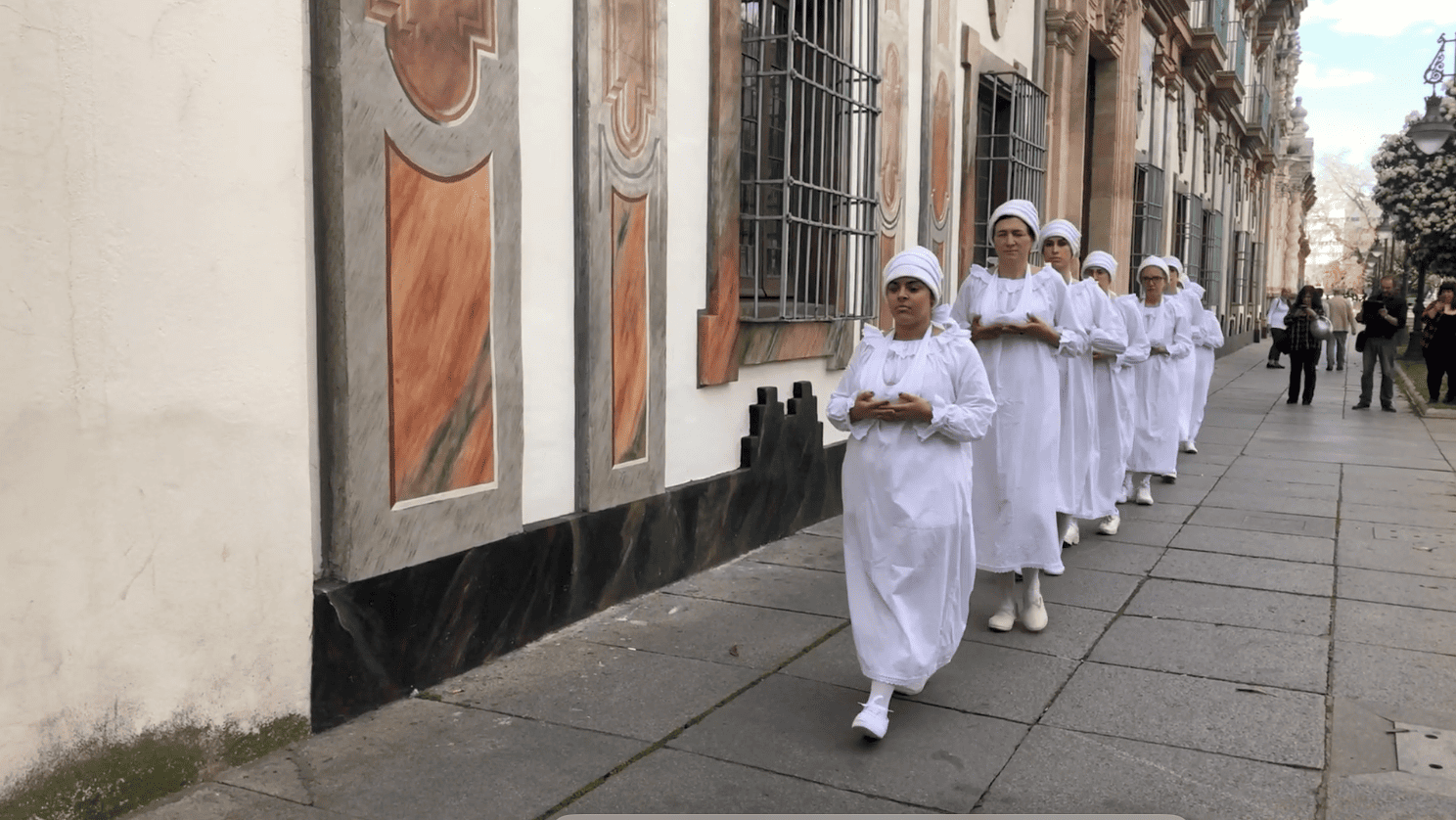
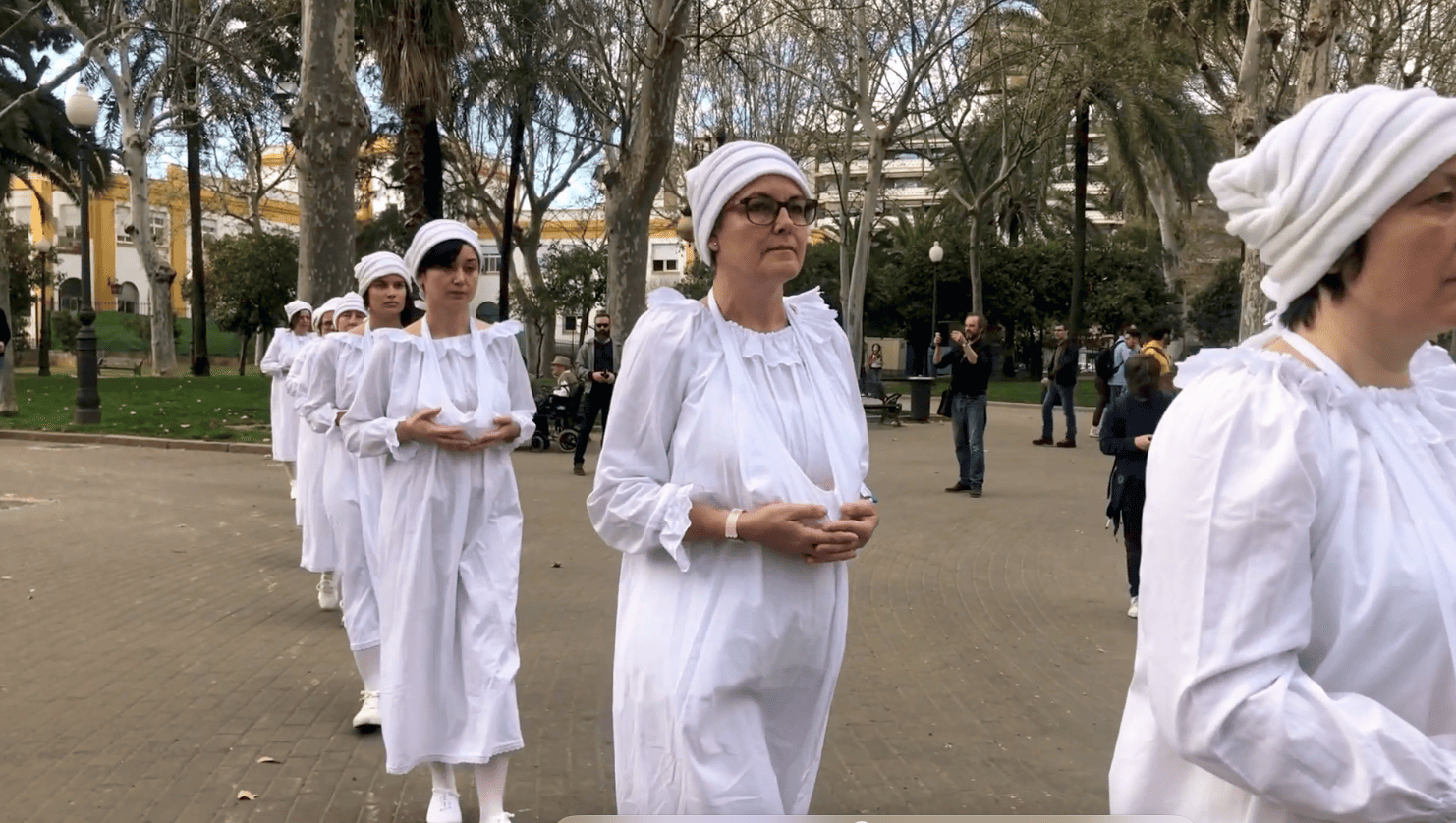
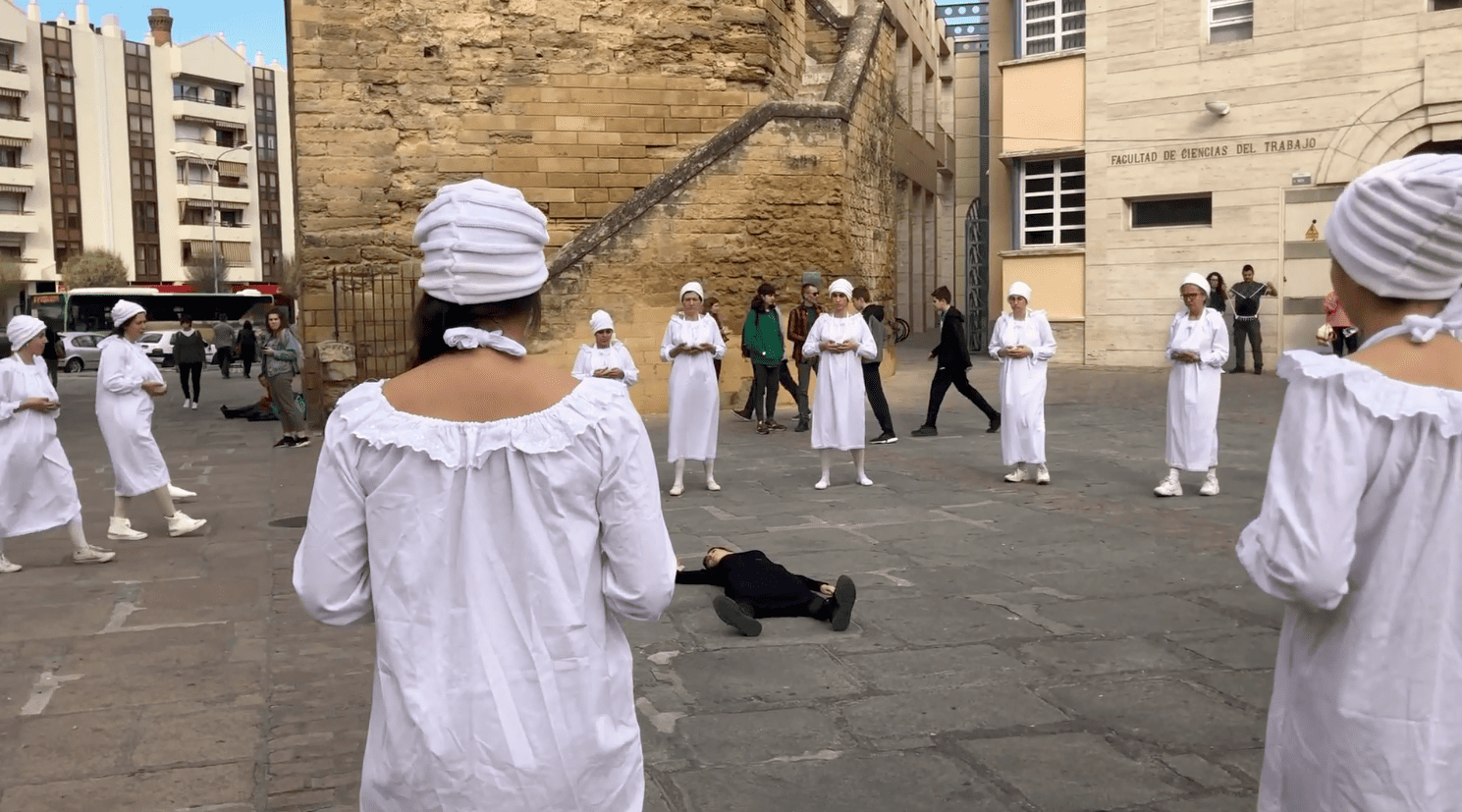
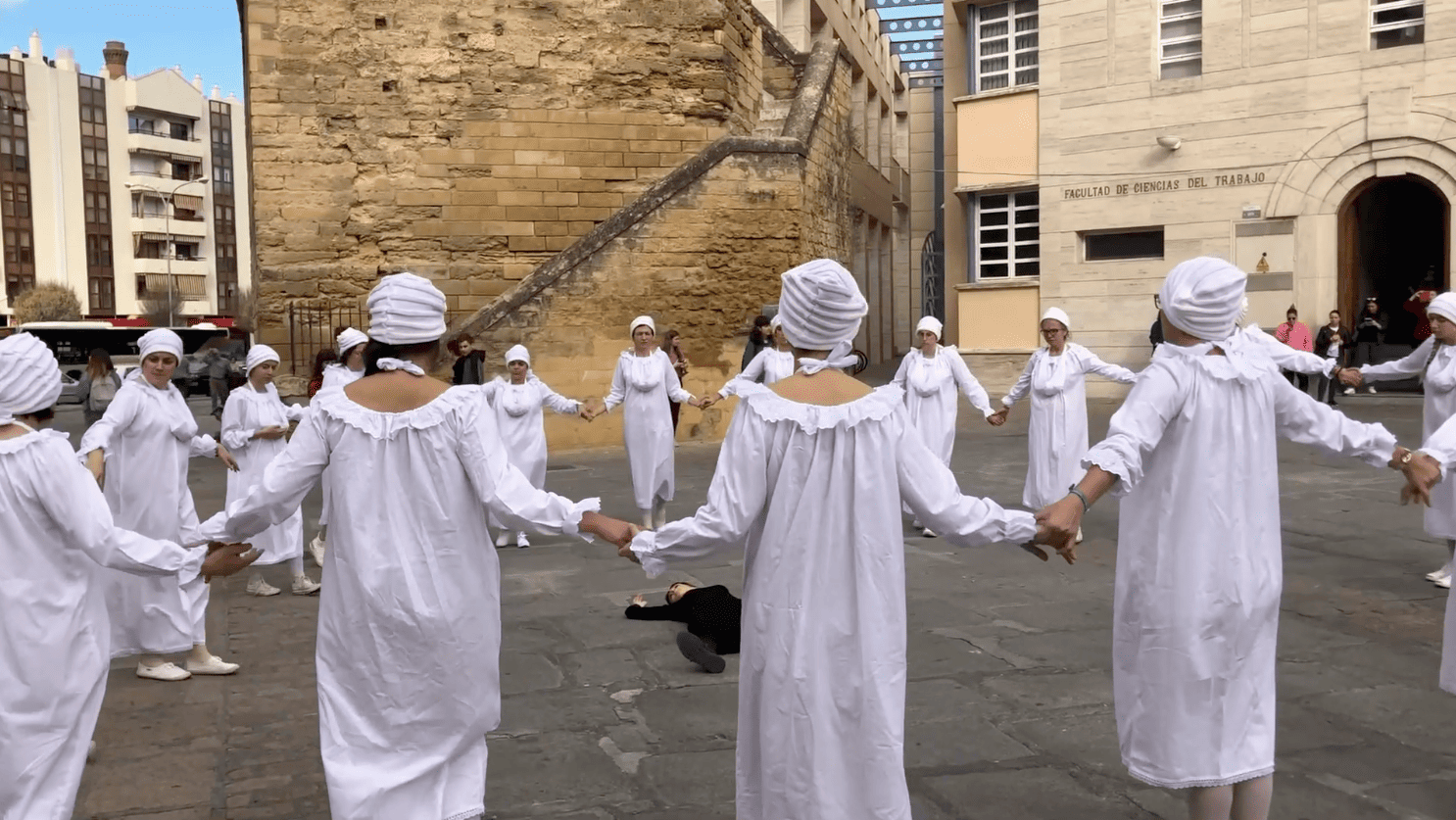
A ação reúne dezenove mulheres que percorrem as ruas de Córdoba carregando pedras de quartzo rosa nos braços. Ao chegarem à torre, formam um círculo ao redor de uma mulher vestida de preto, que permanece deitada no chão.
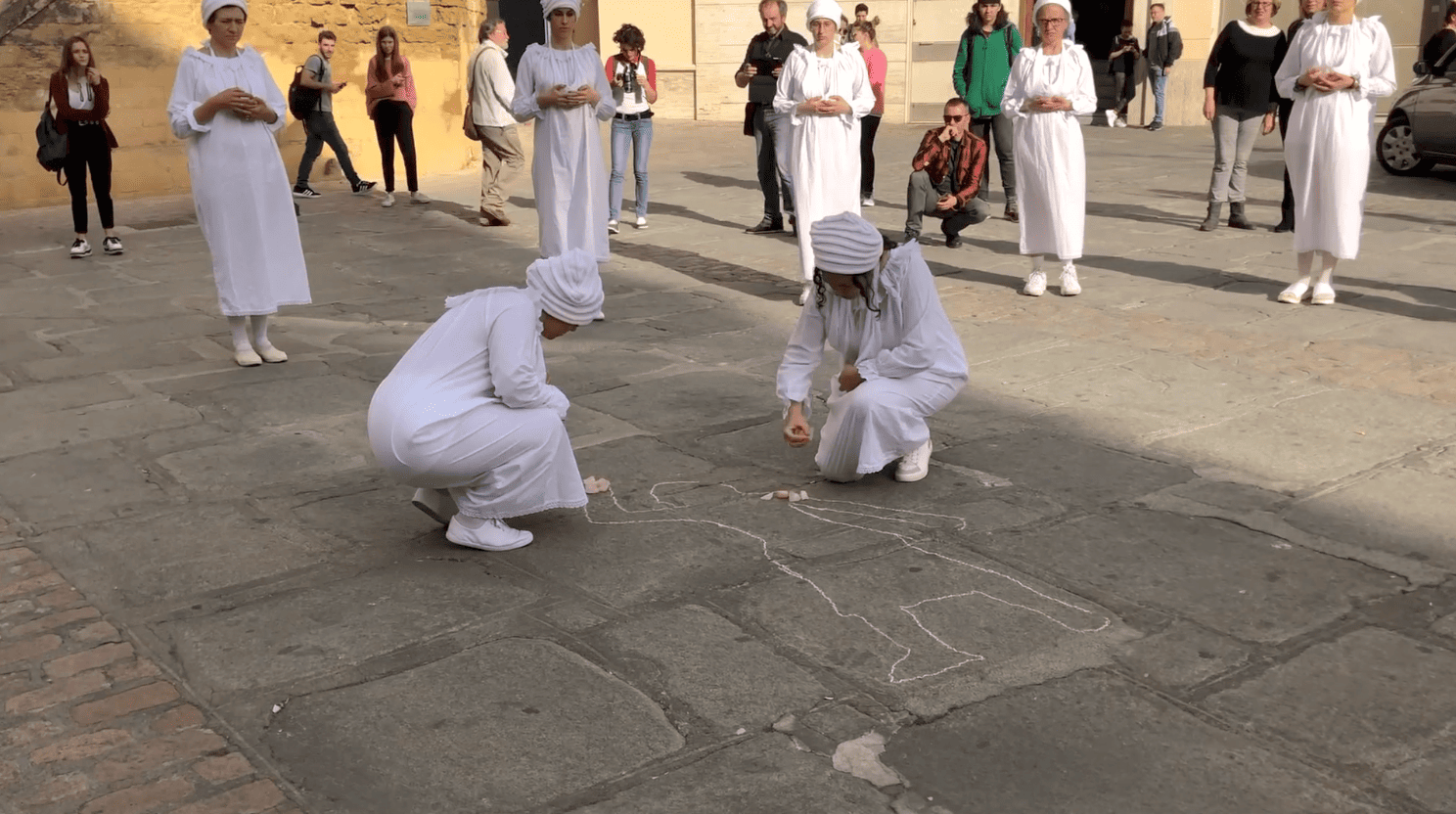
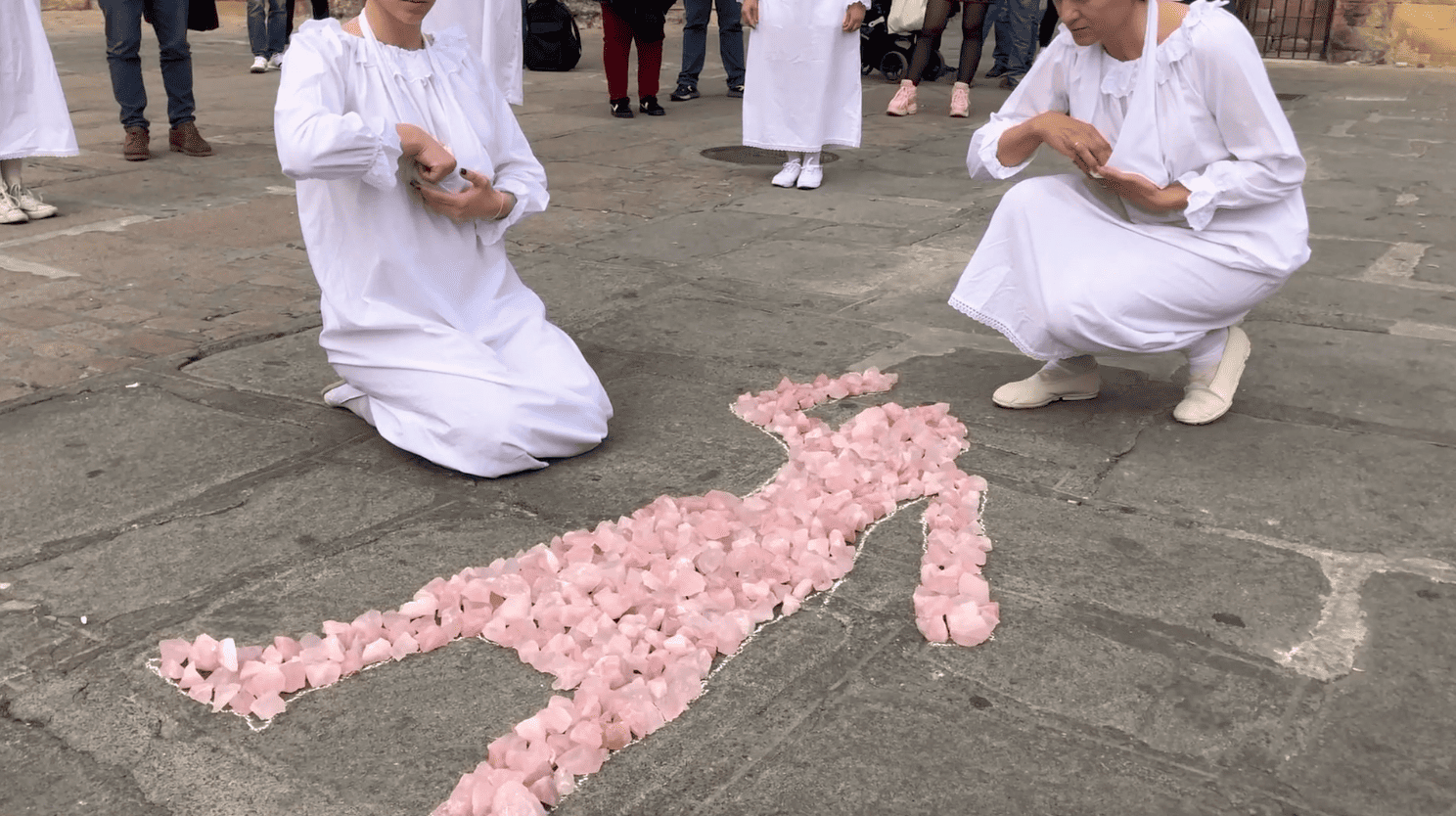
Uma das participantes desenha com giz o contorno de seu corpo. A mulher se levanta e deixa para trás uma silhueta vazia. As demais participantes preenchem esse espaço com pedras de quartzo rosa até reconstruir uma nova figura humana.
Esse corpo de pedra simboliza a força, o amor-próprio e a capacidade de transformação. A energia tradicionalmente associada ao quartzo rosa transforma-se em uma metáfora de cura para todas as mulheres que sofreram violência.
A performance transforma a ausência em presença e a dor em memória coletiva, propondo um ato simbólico de reparação e resistência.
The performance is inspired by the Cordoban legend of La Malmuerta, which tells the story of Clara, a woman murdered by her husband out of jealousy. After her innocence was established, the perpetrator was sentenced to build a tower in her memory: the present-day Torre de la Malmuerta.Taking this story as its starting point, Beth Moysés invites reflection on the countless women who, throughout history, have been victims of patriarchal violence.
The action brings together nineteen women who walk through the streets of Córdoba carrying rose quartz stones in their arms. Upon reaching the tower, they form a circle around a woman dressed in black, who lies motionless on the ground.
One of the participants draws the outline of her body in chalk. The woman then rises, leaving an empty silhouette behind her. The other participants fill this space with rose quartz stones, gradually reconstructing a human figure.
This stone body symbolises strength, self-love and the capacity for transformation. The energy traditionally associated with rose quartz becomes a metaphor for healing for all women who have experienced violence.
The performance transforms absence into presence and pain into collective memory, proposing a symbolic act of reparation and resistance.