Esta série de desenhos foi realizada em um período de cinco meses, durante minhas visitas semanais à Delegacia da Mulher, localizada na Zona Leste, periferia da cidade de São Paulo.
Nas minhas visitas à Delegacia, ao passar pela porta principal, sempre encontrava sentada em um mesmo banco uma silhueta feminina esperando sua vez de ser atendida. Como se eu fosse uma destas mulheres, costumava me sentar nesse mesmo lugar, observando o semblante de cada uma: o olhar voltado para baixo, o silêncio, a imobilidade, a lágrima contida, as roupas, os sapatos, as diferenças. Tudo isso foi me seduzindo. Pensei na quantidade de mulheres que já passaram por aquele mesmo banco, cada uma com sua história. Quis, de alguma maneira, registrar aquele momento, sem que isso criasse qualquer tipo de constrangimento para elas. Com um bloco de papel na mão e um lápis, passei a desenhar aquele instante único: o da espera.
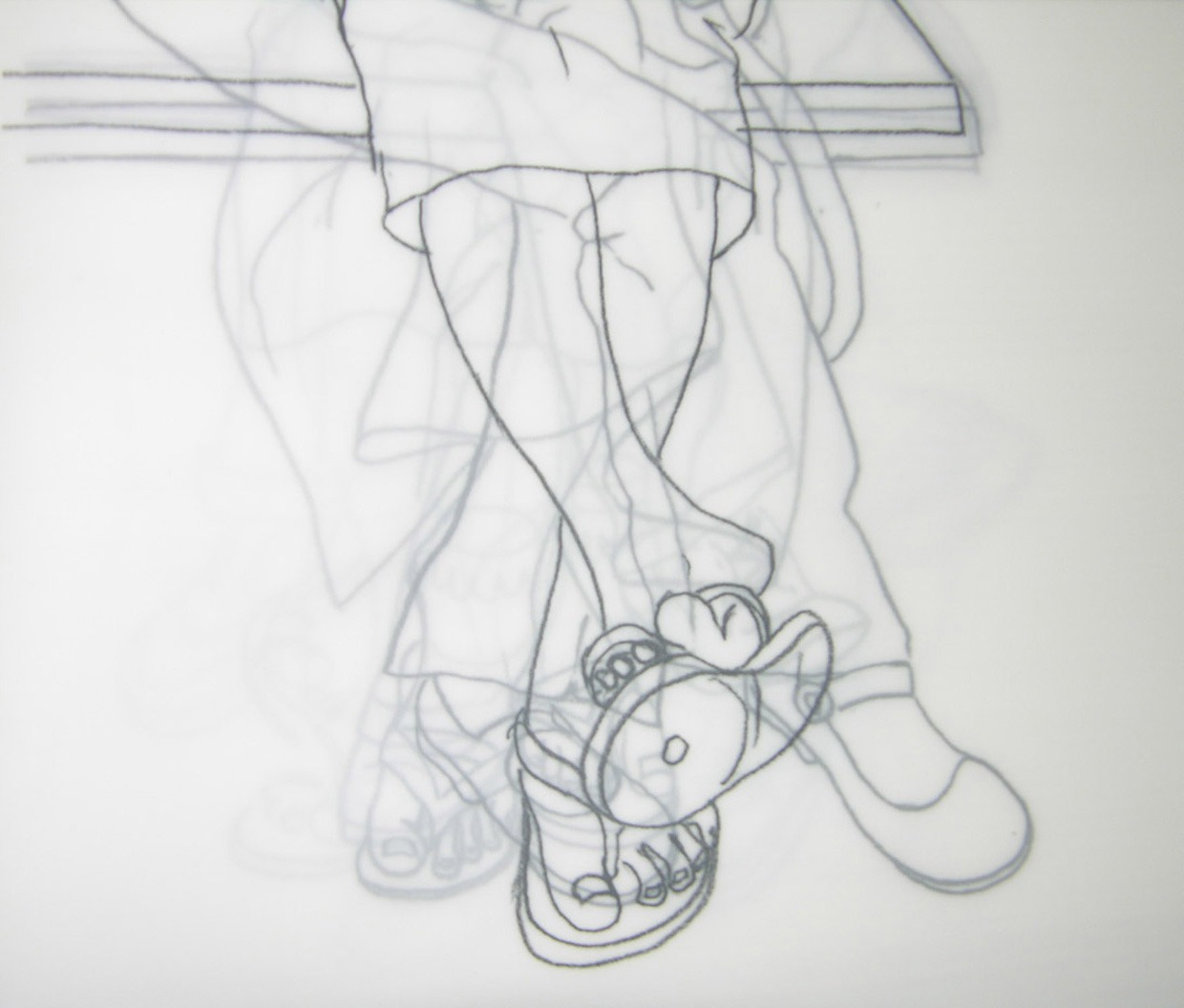
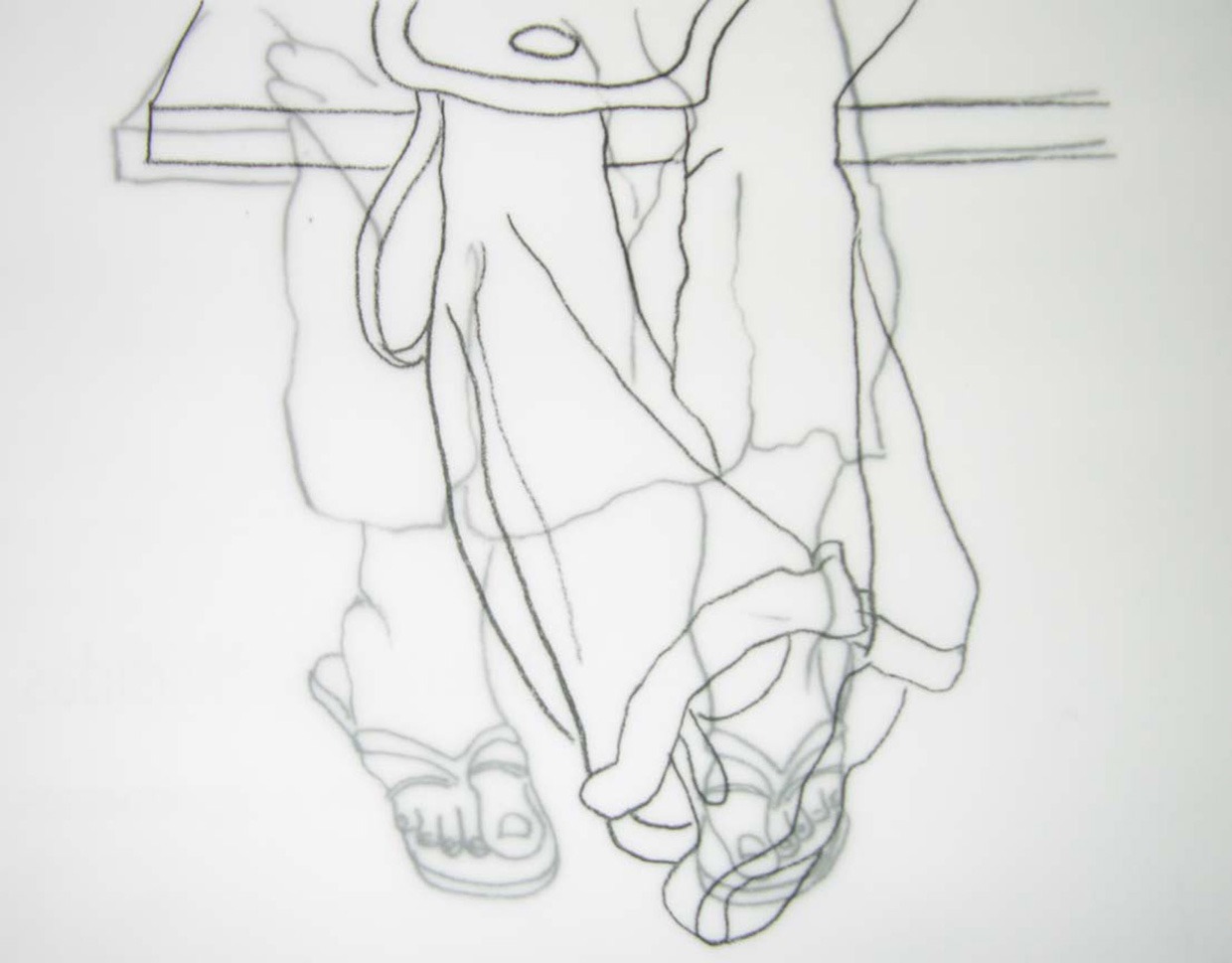
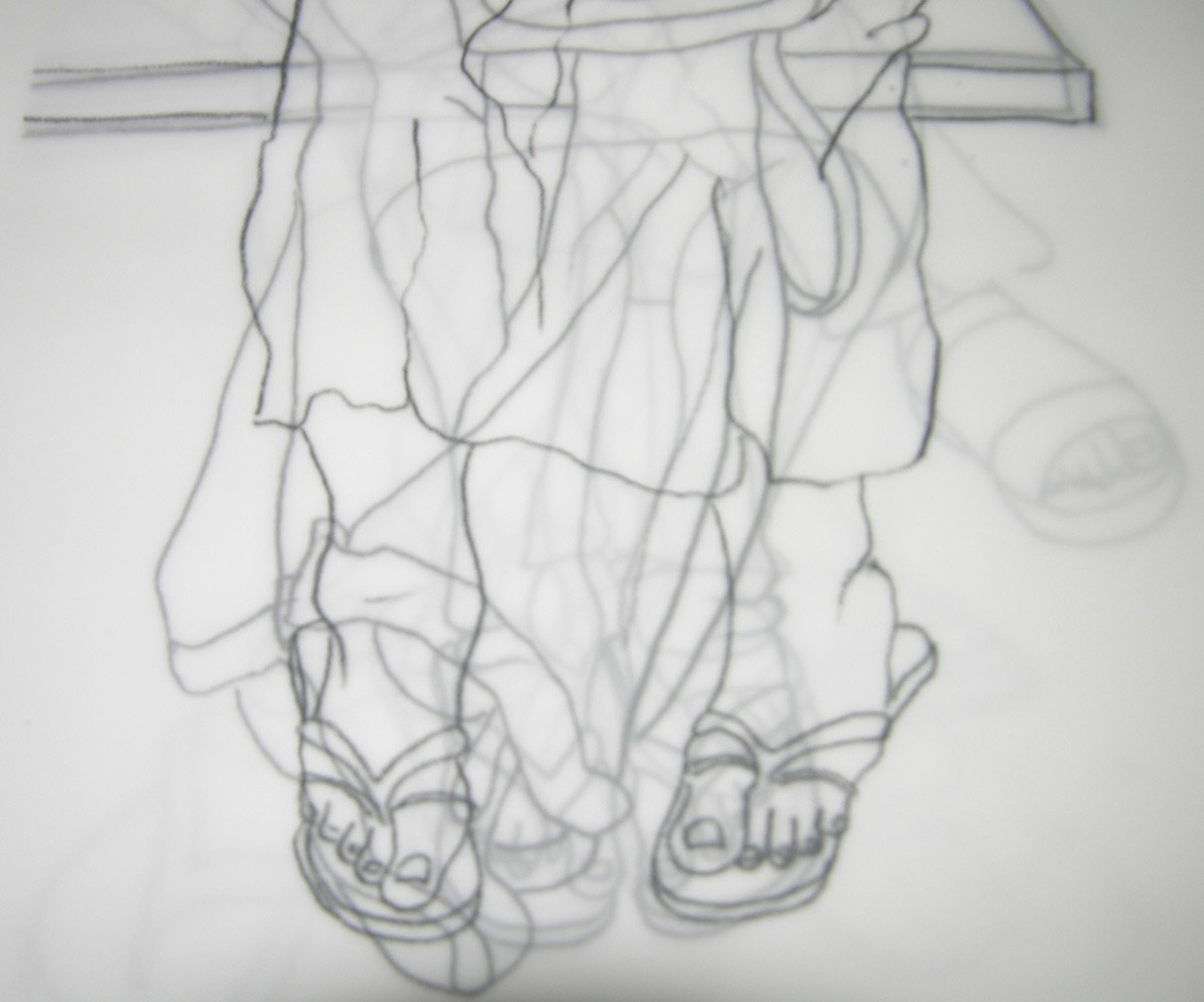
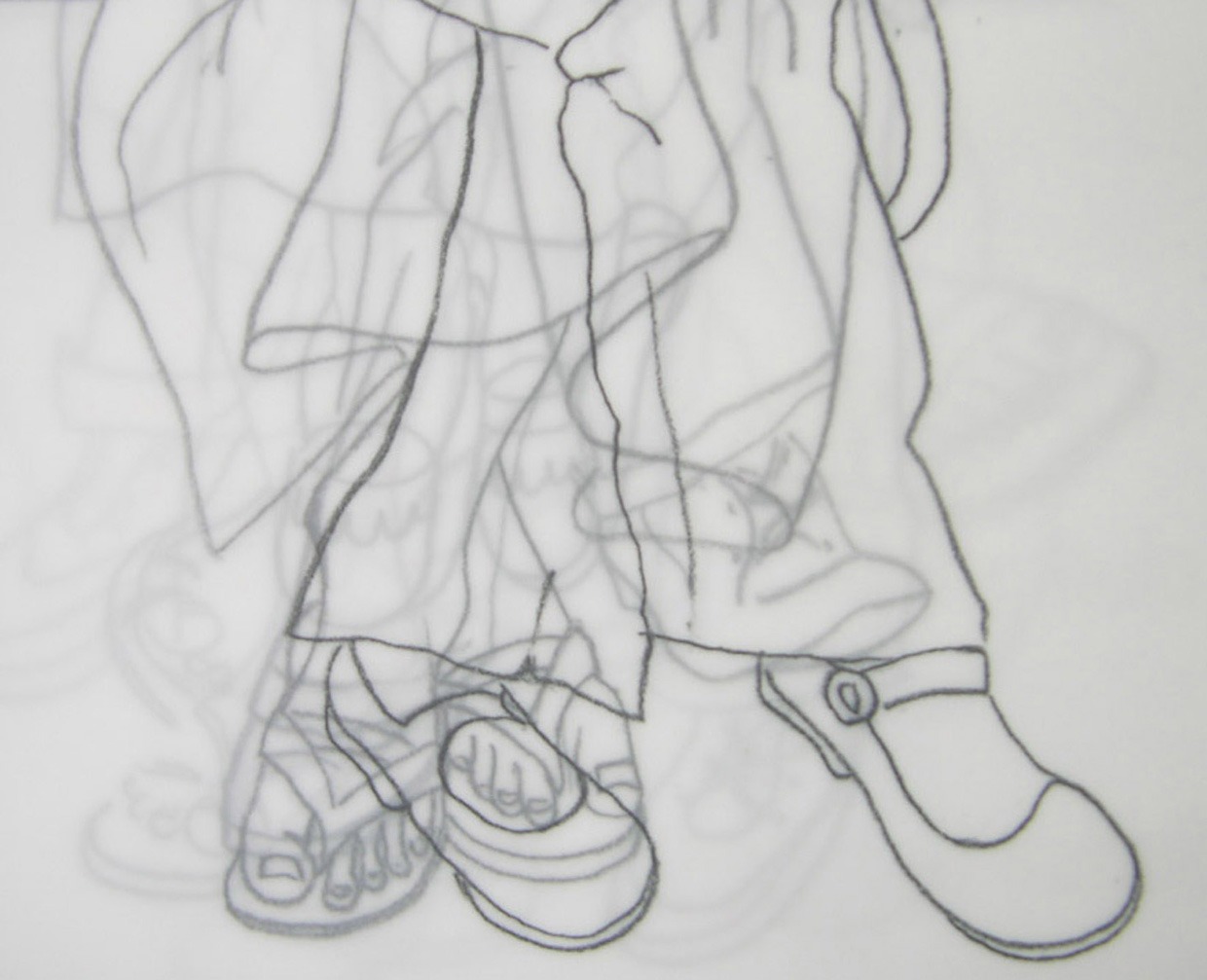
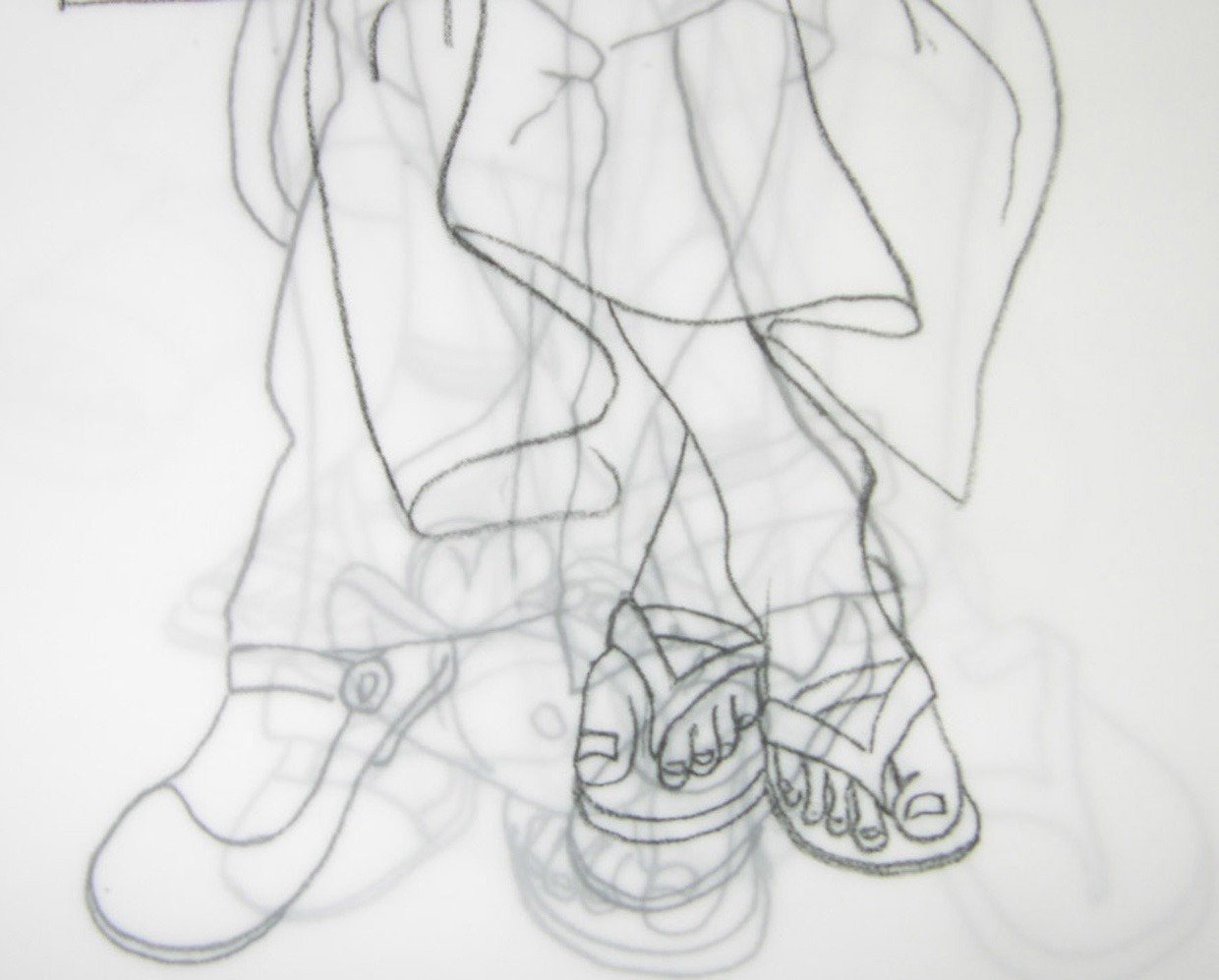
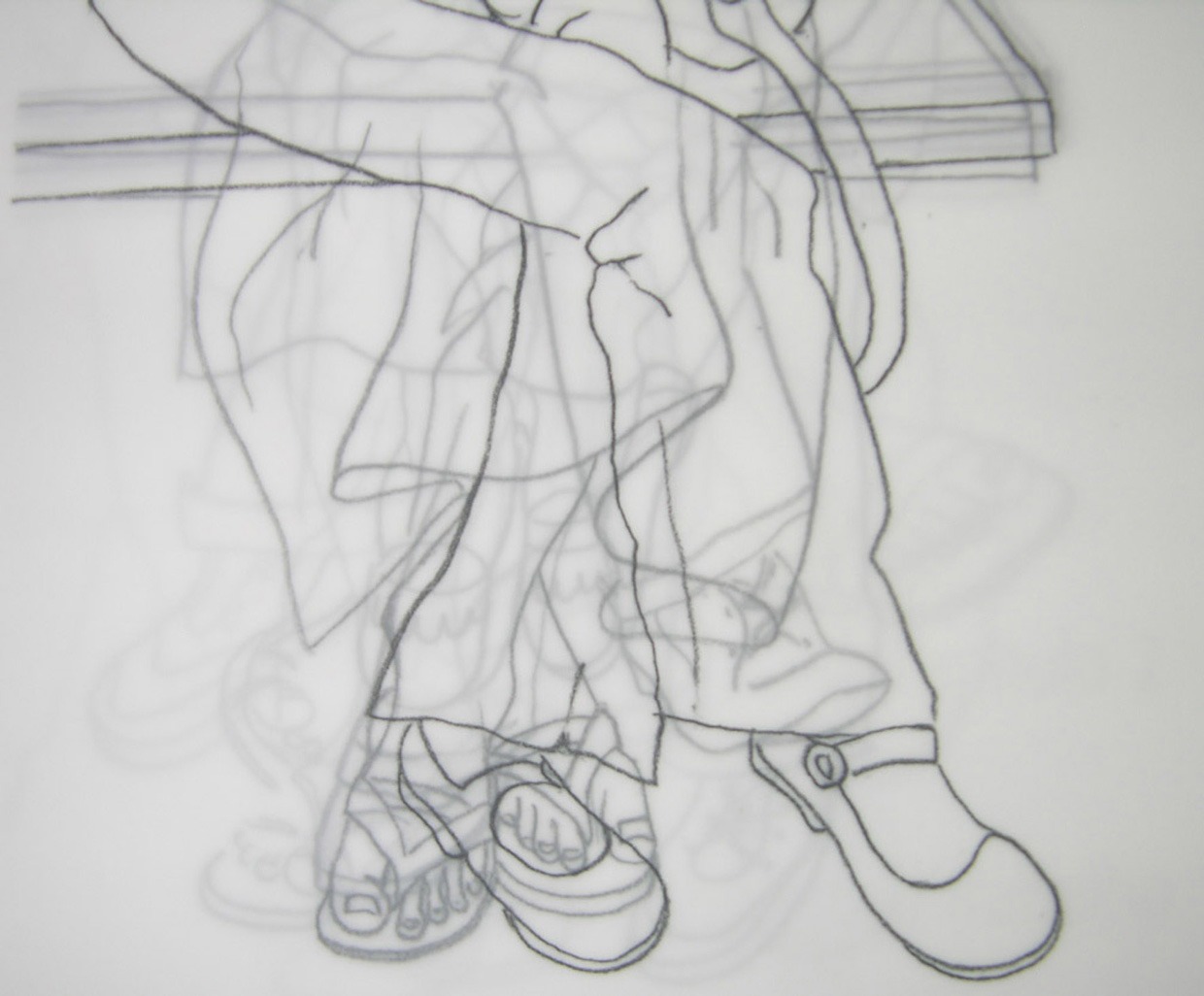
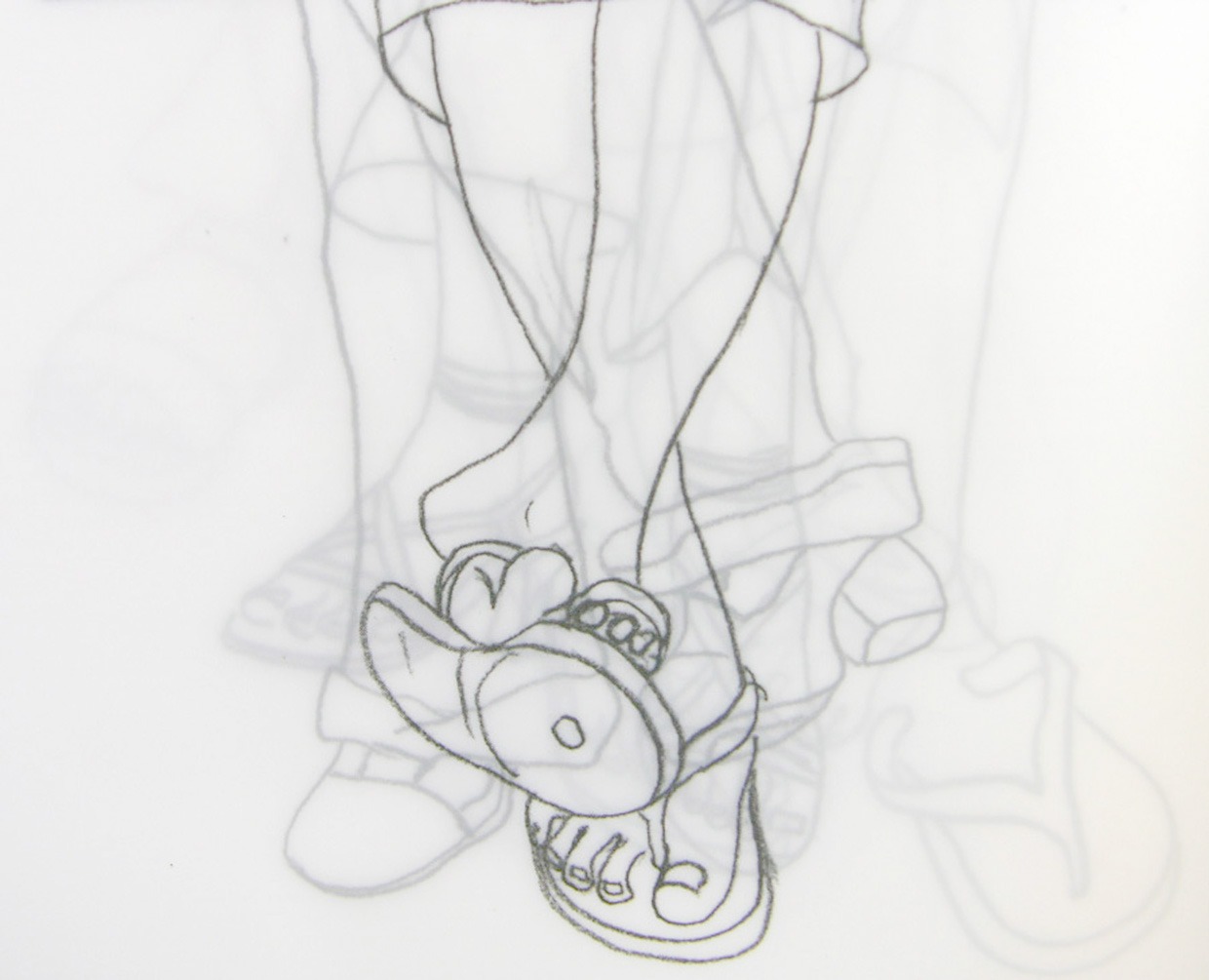
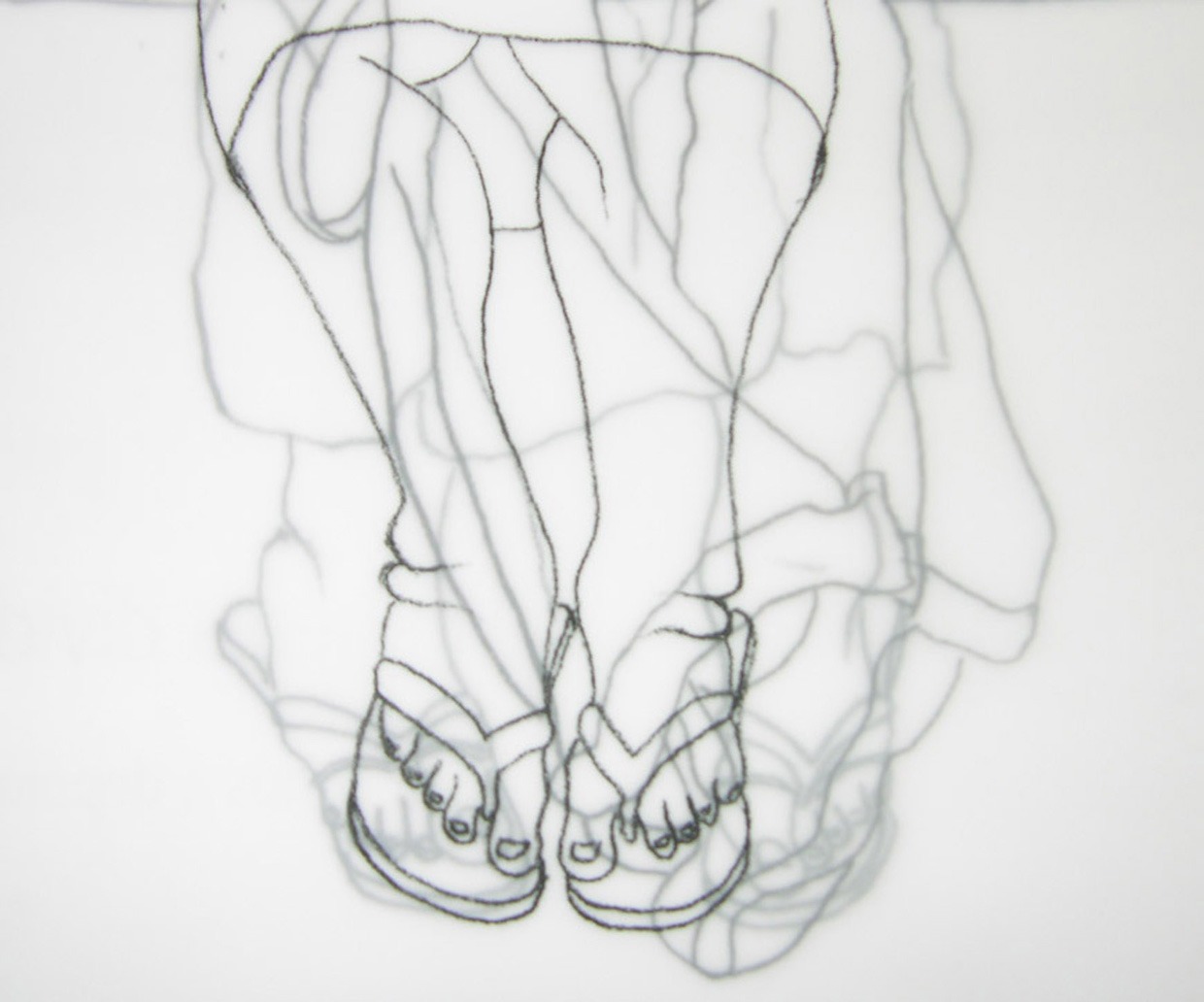
Essa espera era tão longa que pude registrá-la de forma detalhada. Concentrada na parte inferior do corpo das mulheres, os resultados foram corpos femininos divididos ao meio. Ao meio não só porque escolhi uma parte para observar e traçar, mas também porque elas estão sempre divididas entre o amor e a dor. Muitas vezes, ainda amor pelos parceiros que as violentam; outras vezes, amor a Deus que, através da voz do homem, lhes pede paciência e resignação perante o sofrimento.
Desenhava compulsivamente e, a cada nova mulher, um novo registro. Mantendo sempre o foco na mesma direção, o desenho foi formando diferentes mulheres, ocupando sempre o mesmo lugar, no mesmo banco.
No final do trabalho, conversei com cada uma delas e notei o quanto precisavam de ajuda. Precisavam de alguém para escutá-las, alguém com quem pudessem dividir seus problemas. E eu escutei, escrevendo seus depoimentos. São esposas, mães e filhas, mulheres que sofreram violência física e psicológica.
Estes desenhos mostram a cara do sofrimento. Não retratam ninguém, não identificam quem é a mulher; são apenas linhas que percorrem o papel, formando diferentes pernas, pés, palavras…
The wait was so long that I was able to record it in detail. Focusing on the lower parts of the women’s bodies, the resulting drawings depicted female bodies divided in half. Divided in half not only because I had chosen one part of their bodies to observe and draw, but also because they are always torn between love and pain. Sometimes, they still love the partners who abuse them; at other times, they love God, who, through the voice of men, asks them to be patient and resigned in the face of suffering.
I drew compulsively, making a new record with each new woman. Always keeping my focus in the same direction, the drawing gradually took shape, forming different women who occupied the same place, on the same bench.
At the end of the project, I spoke with each of them and realised how much they needed help. They needed someone to listen to them, someone with whom they could share their problems. And I listened, writing down their testimonies. They are wives, mothers and daughters, women who have suffered physical and psychological violence.
These drawings reveal the face of suffering. They do not portray anyone or identify any particular woman; they are simply lines that travel across the paper, forming different legs, feet, words…